Silver Anklets for Newborns: Tradition, Benefits & Buying Guide
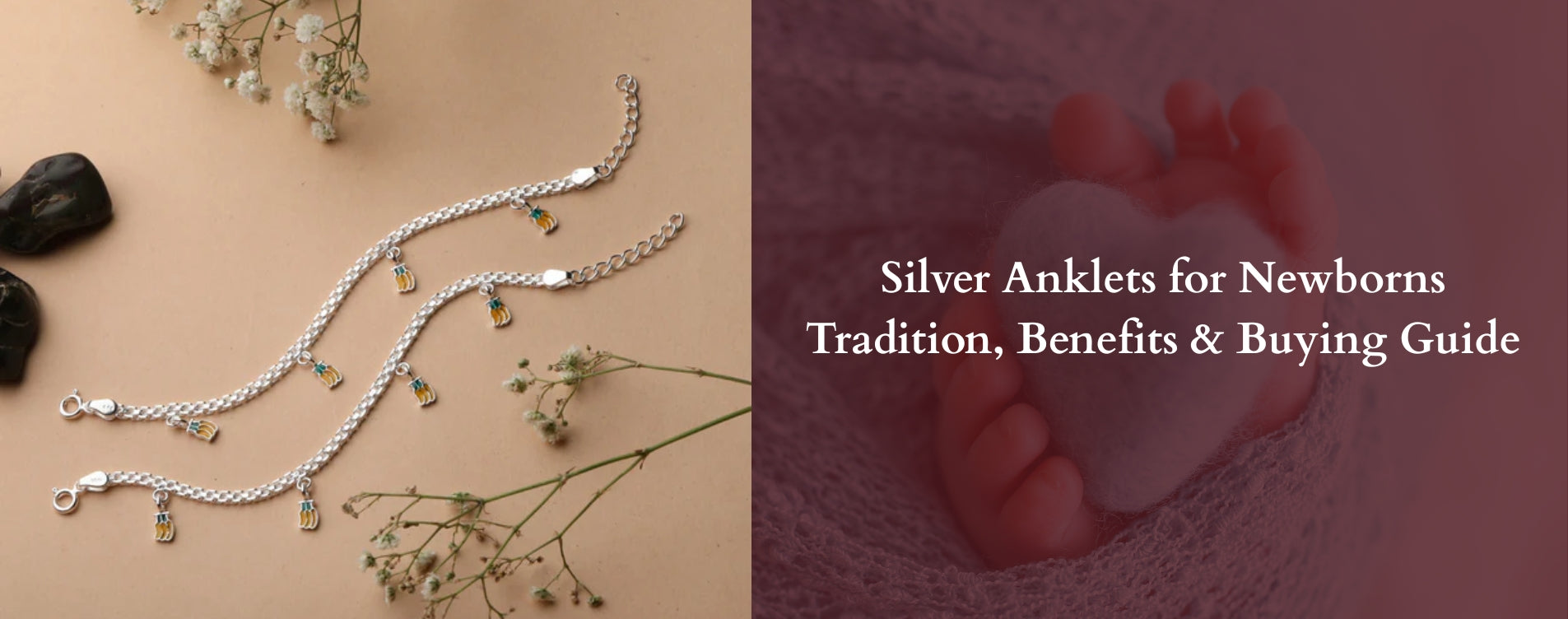
Silver anklets for newborns are one of the most loved forms of baby jewellery. They are small, delicate, and full of meaning. For generations, families have gifted silver anklets to newborn babies as a symbol of love, protection, and good health. Today, parents continue this tradition while also looking for safety, comfort, and purity.
This blog will help you understand the tradition behind silver anklets, their benefits for newborns, and how to choose the right pair. If you are a parent, grandparent, or someone looking for a meaningful baby gift, this guide will help you make the right choice.
The Tradition of Silver Anklets for Newborns
In many Indian households, silver anklets—also known as payal—are among the first ornaments a baby wears. They are often gifted during special occasions such as the naming ceremony, birth celebrations, or the baby’s first festival.
Silver has always been seen as a pure and positive metal. Elders believe it protects the baby from negative energy and brings good luck. The gentle sound of anklets is also considered auspicious and joyful.
Traditionally, silver anklets were simple in design, focusing more on purity than decoration. Even today, many families prefer plain and lightweight anklets for newborns, keeping comfort and safety as the top priority.

Why Silver Is Preferred for Newborn Jewellery
Silver is not chosen by chance. It has qualities that make it suitable for a baby’s delicate body.
First, silver is naturally gentle on the skin. Newborn skin is very sensitive, and silver is less likely to cause irritation when compared to artificial metals.
Second, silver is known for its cooling nature. In traditional beliefs, this helps maintain body balance, especially in warm climates.
Third, silver is durable yet soft enough to be shaped into smooth, baby-safe designs. This makes it ideal for jewellery meant for daily wear.
Because of these reasons, silver continues to be the preferred metal for newborn anklets even in modern times.
Benefits of Silver Anklets for Newborns
Silver anklets offer more than just beauty. They combine emotional, cultural, and practical value.
1. Skin-Friendly and Safe
Pure silver, especially 925 silver, is safe for delicate baby skin. It reduces the risk of rashes or allergic reactions when compared to low-quality metals.
2. Gentle Sound for Sensory Awareness
Many anklets come with tiny bells that produce a soft sound. This gentle sound can help stimulate the baby’s hearing and awareness as they move their legs.
3. Symbol of Protection
In traditional belief, silver is thought to protect babies from negative energy. While this is cultural rather than scientific, many families value this emotional comfort.
4. Emotional and Sentimental Value
Silver anklets often become keepsakes. Parents preserve them as memories of their baby’s earliest days, making them emotionally priceless.
5. Thoughtful Gifting Option
Silver anklets are meaningful gifts that show care and intention. They are often chosen over toys or clothes because they last longer and carry deeper meaning.
Understanding 925 Silver for Newborn Anklets
When buying silver anklets, you may often see the term “925 silver.” This means the anklet is made of 92.5% pure silver mixed with a small amount of other metals to improve strength.
Pure silver alone is very soft. For baby anklets, 925 silver is ideal because it offers the right balance of purity and durability. It keeps the anklet strong enough for daily wear while remaining safe for newborn skin.
Always look for a purity mark or certificate when purchasing silver anklets for a newborn.
How to Choose the Right Silver Anklets for a Newborn
Choosing anklets for a newborn requires careful attention. Below are key points every parent or buyer should consider.
1. Purity
Always choose anklets made from 925 silver. Avoid plated or mixed metals, as they may cause skin reactions.
2. Lightweight Design
Newborns should wear only very light anklets. Heavy jewellery can cause discomfort and may disturb the baby.
3. Smooth Finish
Check that the anklet has smooth edges and no sharp parts. The surface should feel soft when touched.
4. Adjustable Size
Babies grow quickly. Adjustable anklets allow size changes and ensure longer use without discomfort.
5. Secure Clasp
The clasp should be strong but safe. It should not open easily, yet should not pinch or hurt the baby’s skin.
6. Simple Design
For newborns, simple designs are best. Avoid large charms or pointed shapes that may cause irritation.
When Should a Newborn Wear Silver Anklets?
There is no fixed rule. Some parents prefer to wait until the baby is a few weeks old, while others choose to make the baby wear anklets after a naming ceremony.
It is important to observe the baby’s comfort. If the baby seems irritated or restless, it is better to remove the anklets and try again later.
Silver anklets should not be worn too tightly, and parents should check the fit regularly as the baby grows.
Caring for Newborn Silver Anklets
Proper care helps maintain the shine and safety of silver anklets.
- Clean anklets gently with a soft cloth
- Avoid harsh chemicals or strong cleaners
- Store them in a dry cloth pouch when not in use
- Check regularly for loose clasps or rough edges
With proper care, silver anklets can remain beautiful for years.
Silver Anklets as a Meaningful Baby Gift
Silver anklets are one of the most thoughtful gifts for a newborn. They show care, tradition, and emotional connection. Unlike clothes or toys, silver anklets are timeless and can be preserved as memories.
Many parents also pass them down as family keepsakes, making them even more special.
If you are looking for a gift that is both meaningful and lasting, silver anklets are an excellent choice.
Frequently Asked Questions (FAQ)
Are silver anklets safe for newborn babies?
Yes, silver anklets made from 925 silver are generally safe for newborns. They should be lightweight, smooth, and properly fitted.
At what age can a baby wear silver anklets?
Many parents choose to make babies wear anklets after a few weeks or during a traditional ceremony. Always ensure the baby is comfortable.
Why is 925 silver recommended for newborn anklets?
925 silver offers high purity with better strength. It is safe for sensitive skin and suitable for daily wear.
Can newborns wear silver anklets all day?
It depends on the baby’s comfort. Some parents let babies wear them for short periods, while others allow daily wear with regular checks.
How do I know if anklets are too tight?
If the anklet leaves marks on the skin or restricts movement, it is too tight. There should always be slight space for comfort.
Do silver anklets need special maintenance?
Basic care is enough. Clean gently, store properly, and check regularly for safety.
Conclusion
Silver anklets for newborns are a beautiful blend of tradition, care, and emotional value. They are not just ornaments but symbols of love, protection, and blessing. By choosing pure 925 silver, focusing on comfort, and following proper care, parents can ensure their baby enjoys both safety and tradition.
Whether you are buying for your own child or gifting someone special, silver anklets remain a timeless and meaningful choice.